
Remembering the Wedding Present
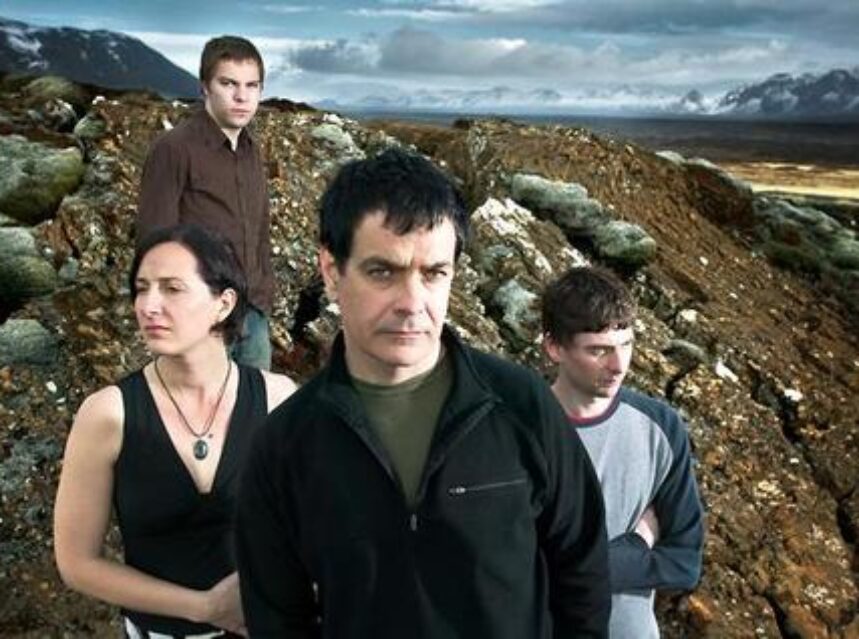
With the release of the excellent new ‘Valentina’ album. With Guitars wanted to somehow impress, more than just post a review – next best thing a vintage interview. Back in 1994, talk was of ‘Watusi, The Smiths, ‘Bizarro’, ‘Seamonsters’, producers Albini, Vig and Frisk, then their changing personnel and record company, also before in 1992, when the band released a Top 20 single every moth of that year, there is still time to learn even more about an exceptional band, even back then. From her on in your in the capable hands of Tony Woolgar…
Remember the Wedding Present? Those cheeky chaps who appeared on Top Of The Pops almost 12 times in 1992, as each of their ‘one single a month’ offerings made the top 20? Well since then they’ve changed record companies, parted company with original bass player Keith and are about to unleash a rather splendid poptastic album ‘ Watusi’ onto the unsuspecting British record buying public. What better reason then, to cast a look back and forwards over the career as once was once described as the ‘most uncomplicated band in the world’? so it was that David Gedge and I sat down on opposite ends of the telephone line to reminisce….
David Gedge, Wedding Present singer, guitarist and songwriter, has been writing songs for as long as he can remember, and he’s always wanted to be in band. "There was nothing else I really wanted to do”. he recalls, “all the time I’d always really been aching to do it. Even though I’d been to university and did maths, at the back of my mind I was still thinking, you know, well, if I get this finished then I’d be a pop star. I’ve been writing songs all the time. They were basically terrible for eight or nine years up to about three years ago.” They did call Wedding Present ‘The Smiths fans second favourite band’, so were the Smiths an early inspiration?
“I’m not a great fan of Morrissey, especially nowadays,” Davis contents, “ but I’ve always been a fan of bands that are completely original – which they were. I think probably the first I heard was that single on the Peel session, and straight away I knew that this is completely different from anything else because of the lyrical style, and because it was the post-punk era; it was quite gentle and achievable – quite breath-taking really. The other type of bands I’ve always liked are extreme bands like The Membranes or The Birthday Party – the sort that just leaps out of the radio. It’s a bit of a compilation of those types of groups.” Though Pete Solowka aka Grapper (now of Ukrainians infamy) has been in bands with David since school days, he wasn’t in the first incarnation of what was to become The Wedding present. David recalls meeting Keith just after leaving Leeds University …”I put an advert in the Evening Post for a bass player…actually I put ‘SHY BASE REQUIRED’. I’ve been in groups with so many bass players who are really mouthy and want to take over, it’s really annoying because I wanted to be the boss of the group. He thought it was quite good actually – to respond to an advert that wanted a shy person, but he was great. So it was him, me and my girlfriend at the time - she was the drummer . we were called the Lost Pandas. Then we got another guitarist: basically I fell out with her and she got a new boyfriend, and he was the new guitarist – which was a bit progressive of me. But that created a problem; they went to America so we had to start again really, so we got Shaun. Peter was just basically roped in because he knew the songs and he was a guitarist – but I used to write all his parts for him. He was more interested in Ukrainian music and stuff; Eurhythmics and stuff like that, so, he wasn’t completely the appropriate choice but it seemed to make a certain amount of sense.”
Thus born the first Wedding Present single, the highly collectable ‘Go Out And Get ‘Em, Boy’ hit the streets of Leeds in late 85 – early 86, David recalls getting “rather excited”… “It was a combination of years and years of planning, in a way,” he admits. “we never felt good enough to make a record, do we made a few demo tapes and stuff and sent them to Peel and record companies. But we never really had much hope, but then…it was all geared towards that first single really – we were psyched-up for it, put a lot of effort into it. You’d come back with the actual finished thing in your head. Then after that we’d hear it on radio; hearing John Peel play it for the first time – it’s a tremendous feeling. I remember running down the street, banging on the door, ‘HE’S PLAYING IT NOW! HE’S PLAYING IT NOW!’
“Of the LP s that have actually been released so far, I’d say ‘Seamonsters’. The further I go back in history the least happy I am, with the worse one being ‘Tommy’, and then I prefer ‘Bizarro’ ahead of ‘George Best’” David Gedge reflects.
The Wedding Present have always has a raw edge to the sound, David puts this down to not having much time to mess about in the studio. “Mainly it’s because we couldn’t afford anything else.” He explains. “When you’re allocated a short space of time in the studio it tends to sound pretty live anyway. You haven’t got time to do much messing about – but I’ve always liked that anyway. I’ve always said that this is a pop group. It seems almost revoluntary now that people have to say things like that because it’s so secretive, the production and remixing, that the professional concept of musicians playing the songs seems almost ludicrous now – which is a bit of a shame really.”
Initially, Wedding Present has their own label, Reception, which also released the first Cud singles. David liked the idea of having their own label, but admits it got more difficult as the band got more successful. “You haven’t really got the time to be a label and a group at the same time,” he adds. “We did a record by This Poison from Scotland, but it wasn’t really fair on them. They got the initial surge of the interest because it was our label but we didn’t really have the time to send out thousands of press copies and get them gigs. We were also on tour half of the year, or whatever, so, it was a bit ridiculous, and eventually it was just limited to us, and then we signed to RCA.”
Looking back on the bands career to date, David’s a little unsure when asked what were the best moments so far. “I can’t really say because it always changes,” he explains. “There’s been so many little ones, like playing at John Peel’s birthday party which was really great. To actually be invited to play that was fantastic – and support The Fall as well. The first time you go abroad is really exciting, or the first time we played the Reading Festival in front of twenty thousand people was brilliant. The first time we went to America; you get off the plane and a fan comes up and says ‘can you sign my records’ – and he’s got every record you ever made, it’s incredible, if I do a Peel session I always fulfil an ambition. It’s hard to pinpoint one thing really.”
He’s similarly ambivalent about the worst moments…
“Well, again, there’s been a few bad ones. Playing at the Reading Festival, again; it’s bad and good at the same time. It’s quite a nice place to go and visit but it’s not a good place to go and watch pop music, especially if the band’s bass amp blows up like ours did. We were second on the bill; loads of people there; it’s going to be a really great show, and then there’s four minutes silence while they had to go and find a new base amplifier cos we didn’t have spare one, and that was a nightmare. I was waiting for the ground to open up and swallow me, but fortunately it didn’t.”
another sore point was the release of a so called ‘official biography’ of the band in 1988, prior to them going to the US, but while David admits there was some consolation, he’s mostly annoyed that the book was badly written. There was also one point in the bands career where they were seen as the epitomy of all things boring, particularly by the press. David admits that this description was rather hurtful.
“When you grow up you think music papers are actually genuine and you think they are written by people who really care and who want you to listen to good records, but then you find out that it’s just a bunch of mates” he explains. “The Melody Maker had this attitude, if nine out of ten people who wrote for them didn’t like us it wasn’t possible for one of those people to say ‘well actually their quite good’ because they all thought that person was a weirdo – it’s like bullying in a way I think. But now of course I am quite happy to accept that these papers are just…well, it’s like a peripheral thing – it comes after the accrual music; I want to hear a record now rather than hear what somebody else has got to say about it.”
The current line-up of the band has changed recently, with Darren Belk of Doncaster’s Beachbuggy joining on bass. David says he’s fitting in nicely. “His singing gives a new dimension to the group.” He enthuses. “I’ve always liked the idea of backing vocals, but because no one else has ever been able to do it, or wanted to be able to do it – I think Shaun did it a little bit, but he wasn’t very enthusiastic. It’s always been a matter of going to the studio and then thinking ‘Oh well, slap some backing vocals on this’. And get someone to do it at the last minute. With Darren we’ve been writing the songs properly and you get really good backing parts in them, so I think it works great and I’m really pleased with that.
I’ve got to say I was very sad when Keith decided that he wanted to leave, I thought he was crucial to the group and he was one of the founding members along with me. But in some ways I am pleased that he went now because it has changed the band again – and I always thought it important that the group should change, and every time the line-up changes, the sound moves on.
The first track on the new LP ‘Watusi’, ‘So Long Baby’, has a thumping backing, reminisant of mix period Fall….”Well The Fall are one of my favourite groups. It’s kind of a thing that influences pop up every now and again. If you has come to the practice when we were writing that song and said ‘This sounds like The Fall’, then we would have probably tried to make it sound as much not like The Fall as we possibly can cos we’d be too scared of people saying ‘Hey! You’re ripping of The Fall there’.”
However, that didn’t do Pavement any harm….
“That’s going too far really isn’t it!” David chuckles, “It’s like parody, almost. I’m sure I like the idea of the first song being “So Long Baby’ as well, it’s very pleasant for me, very personal.”
Lyrically, David admits that he still finds inspiration from overhearing other people’s conversations…
I write about things that happen to people all the time,” he explains. “I’ve never been that interested in writing overtly political stuff. I’ve never been that interested in poetic or metaphorical imagery, or whatever, it’s just generally been the way people talk to each other. I’ve always found that to be the most easily transferable form into pop music, it just seems to lend itself to pop lyrics as well. So, it’s a mixture of imagining myself in certain situations, or actually being in certain situations myself, hearing other people talking about things; it could be watching a film or reading a book. Occasionally I’ve overheard conversations on trains, or arguments. Arguments are usually better because people usually shout. When people are under a certain amount of stress or tension because of the situation they’re in they do say really great things, but really viciously – which do sound really good in songs, so I’ve got no qualms. I’ll just get me book out and write them down because it saves me hours and hours of thought.”
Of the band’s albums, David definitely leans towards ‘Seamonsters’ rather than the ‘George Best’ style…
“Of the LP s that have actually been released so far, I’d say ‘Seamonsters’. The further I go back in history the least happy I am, with the worse one being ‘Tommy’, and then I prefer ‘Bizarro’ ahead of ‘George Best’. I think we’ve got better.” He recalls. “I don’t really see the ‘Hit Parade’ as an LP because it was always meant to be a series of singles; that’s not the way the songs were written, arranged, so when they were cobbled together because all the singles sold out. I’m really pleased with the new LP, I think it’s different, which always pleases me, as I said before.”
How does it compare to ‘Seamonsters’? “I think ‘Seamonsters’ is probably a rock LP,” David explains, “but I think we got into this fear that we were doing what everyone else was doing which was like, a bit of a verse then suddenly ‘THE BIG CHORUS COMES’ and everyone slams their pedals on, and you get something like Nirvana – it’s really loud. It’s really good to do that in a way because it’s exciting… and it’s bound to be exciting if things take off like that – but you can’t do that every single song which some bands do. So we are looking at more … trying to get some power, but more in the way that it’s written: in the dynamics of the song, a sort of melody and that. A bit like what Girls verses Boys are up to at the moment?”
“I don’t know we could be on the same lines. It’s just that you get a lot of pop records that were made ages before distortion pedals were invented, but they still sound pretty powerful, and it’s because of the way the cords shift and the melody builds – we’re trying to do that. The producer we used, Steve Fisk, he’s into ‘weird’ sort of pop music, and a lot of that is just because he’s got so many ideas for sounds, samples of whatever. I think the easiest way to put that onto a record is probably with a bit of dance beat. He’s got a really extensive knowledge of cult bands, he’ll start talking about a certain sound, and he’ll say ‘Oh yes, The Ventures did that in 1953’, and he’ll get this record out and he’ll say ‘well I’ve got the very effects they used’. His house is just full of gizmos and stuff, and so I think it all added to a different way of actually recording, rather like the live band with amplifiers in the studio did, before it seemed to be an interesting thing for us to do really. We were talking about doing it a different way and here was a bloke who seems to know a lot about that stuff. We were messing about with bongos and keyboards.”
Regarding ‘Seamonsters’, what was Steve Albini like to work with?
“Excellent” David affirms. “He’s got his character faults but then everyone has, but as an engineer, which is what we employed him to do, he’s excellent. He gave us exactly what we wanted, and he actually…
I think he brought out a sound that we’d had all time live, but had never been able to reproduce on record. It all sounded bigger: bigger noise, bigger guitars, bigger drums. A bigger passion, I suppose. It was a very dark and brooding LP, but it definitely suited the lyrics, as well – I’m very proud of that now.”
The producer of ‘Watusi’, Steve Fisk (of Pigeonhed fame), how does he compare with Albini?
“Well he’s got a similar sized ego, I’m beginning to think that all American producers have got massive egos.” David laughs. “In terms of recording technique he’s probably at the other end of the scale, well he’s not that far at the end of the scale; he does like to record bands live, we wouldn’t have used him otherwise. Definitely in terms of sound and things; he had a lot more ideas which Albini would never had used. Albini is very simple, and I don’t say that in a condescending way because I think he’s an excellent engineer, but he’s very…just get the band playing together in a good sounding room with perfect equipment; all the guitars, serviced and tuned: and all the amps working really well. Just mike up the different parts of the room, and just records it, basically. He doesn’t use many effects and studio techniques – it would all be captured in one take. Whereas Fisk, if you let him , would use all his gadgets and his samples.”
While the band have used Fisk and Albini , David draws the line at utilizing Butch Vig’s services…
“I think with Butch Vig we’d possibly be criticized for joining the grunge bandwagon about four years too late.” He contends. “ There’s lots of people I’d like to work with; loads of names have been mentioned. We’ve had meetings with people – it was good in 1992 cos we managed to work with four different producers in the year. The more people you work with, the more ideas you actually get for the future, as well”
The Wedding Present have now signed to Island Records, but the contracts pretty much the same as the one they negotiated with RCA, in that the band have total control over the product.
“The only main thing that I can think of that is different is we let them choose which singles they put out in America – if they do put any out in fact.” David explains. “With RCA we were little too far off things, at times. We wanted to decide everything, but we really hadn’t a clue about America. I may think I know about America, but people in America know what they like. So our stance on this LP has been: ‘Well look, every track on this LP we’re happy with, so if you want to release an American single, then release it in Britain, we still decide. Apart from that its pretty much the same: we decided on the sleeves.”
So you’ve still got full control of things like artwork?
“That’s crucial.” David replies. “I’d never sign a contract which didn’t allow us that. Presentation is part of the overall thing – you can’t just be a songwriter and that’s it: you’ve got to be involved with the recording, production, and eventually the way it actually appears in its sleeve, and the promotion.”
The bands relationship with Radio 1 FM DJ John Peel lasted over their whole career. David still tapes his shows…
“I tape over them because when I go away I get people to tape them for me.” He admits. “When I get back I have a stack of tapes, but as well as just the music, I like to listen to what he says because I think he’s a good presenter – an amusing person to be on the radio. I have a box of them in the car for when I go on long journeys or if I go on tour, or whatever.”
He’s been a fairly good friend to the band over the years…
“I’d be a bit worried if he wasn’t really because our tastes are so closely aligned.” David admits. “Some groups, if you haven’t heard them on Peel, and then you see there going to play live at the Duchess, or wherever you say, ‘Oh, I’ll go and see them’ – and if Peel’s not played it , ninety nine times out of a hundred when you come away you’ll be disappointed because you haven’t liked them. So if Peel has played them, you tend to think there’s more of a chance really. I think he’s got just got really good taste, and if he doesn’t like a record then he won’t play it. They will be the bands that tend to be disappointing when you eventually see them anyway.
I think he’s actually fond of music; for a lot of DJ’s it’s just a step into television of other careers. He generally likes playing records – which is a bit unique for a DJ.”
Though Wedding Present have been called the world’s least complex pop band on more than one occasion, David would now regard the opposite as being the case. “I think we’re now the most complicated group in the world.” He adds. “It’s a constant battle, people manage to make the process of being in a pop group look a lot more complicated than it actually is. I think when people have had a taste of success the like to foster this image that what they’re doing is incredibly difficult – they’re some kind of ‘other being’ because they’re able to write songs. People don’t like me to say things like that because it makes me sound dull, and not very pop star-y – but I just believe that’s what people are really like. This is when the NME journalist walks through and says: ‘Oh yeah, they take all these drugs and shag all these people’. Which , of course, if they did as much as they say, they’d actually be dead – so it’s quite amusing in a way. I’ve never felt the need to pretend to do otherwise.”
You’ve never done all this going down to London for award ceremonies and hanging out with famous people of your era?
“Not really my cup of tea, I’m afraid.” David replies. “ It’s probably why we go through these phases of being completely unfashionable. You’ve got to hang around with Bobby Gillespie and take drugs in top London nightclubs just to get good reviews in the papers. Happily, John Peel doesn’t do that either.”
The idea of the ‘Hit Parade’ (one song per month) won’t be repeated. David considers its uniqueness to have been its main asset, also it was quite difficult to do, with a lot of pressure to put each song out .
“Normally you would just write a load of songs and then think ‘Oh right, I’ll go and record the..”. Possibly in some ways others could choose the songs to record, we always get involved with our own artwork, we had t-shirts and videos for each one. So in the end it was quite a big menu.” He explains. “Having said that, there was an agreement that we had, that the music was the most important thing. If we had felt the song writing was sufficient because of it, we would have stopped the series, I think. Some of the covers maybe weren’t up to scratch. I think all the A-sides were good.”
Of the twelve which was the most satisfying?
“I quite liked ‘Silver Shorts’ because it seemed to epitomize the format: it was a really good, up-tempo, seven inch single, pop record – it seemed to be ideal. Then we had ‘Falling’ as well, which was a bit bizarre.”
One of my favourites of the covers had to be their version of Isaac Hayes ‘Shaft’, which was excellent, particularly the New York vocals being growled out in a think Northern accent, people just don’t say ‘Who’s that black private dick, who’s a sex machine to all the chicks’ in Otley…
“I liked that, but it did get mixed feelings,” David recalls, “some people thought it was really good because it was so weird, but some people thought it was a bit strange, I don’t think Keith ever liked it. The other thing was the guitar parts in that: it took Paul absolutely ages transcripting all the chords. In the original it’s all brass and violins and stuff. He’d change lines into guitar riffs which took him absolutely ages, and it took him a really long time to record it all. I just did the funky guitar all the way through. Everyone always says ‘Oh brilliant guitar that; who did the guitar?’ and I’d say ‘oh, that’s me actually’ – and Paul thought, ‘Well what about all of mine?’: he’d sat there for six hours.”
Special thanks to the typing skills of Klaire Fairie, without whom, this feature would not have been so forthcoming.