
“That’s what I feel about Devo. We were Chuck Yeager in that X-15.” Interview with Gerald Casale

“That’s what I feel about Devo. We were Chuck Yeager in that X-15.” Interview with Gerald Casale
Devo was Gerald Casale’s ticket to rock history. Casale, co-lead vocalist, bassist, and co-founder of Devo helped merge art school concepts with new wave music to establish one of the most original bands in memory.The band’s hit song “Whip It” made it a household name among the MTV crowd. Casale and his group appeared on SNL, got parodied by “Weird Al” Yankovic, and its music is included in numerous Hollywood films.
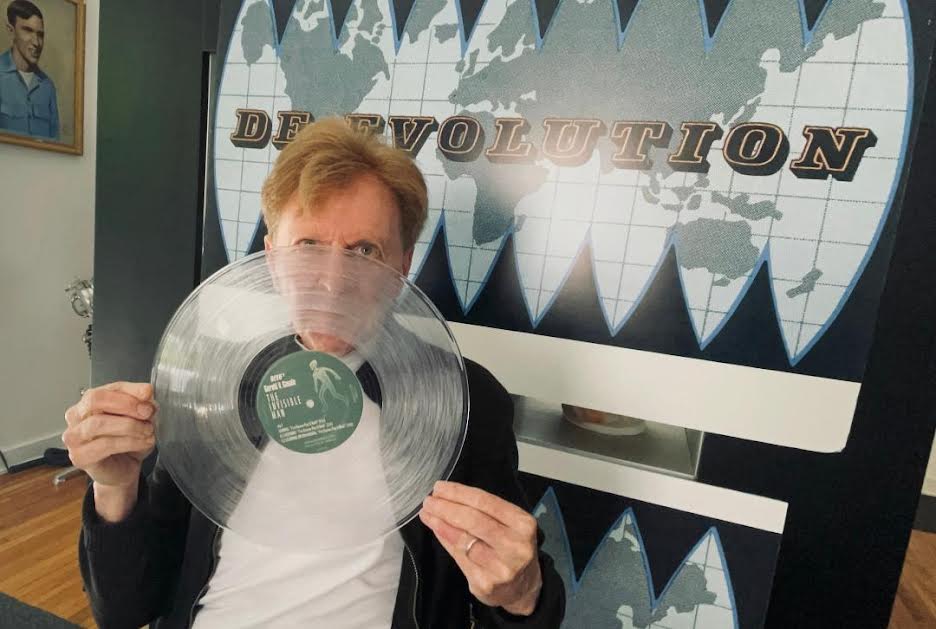
Besides his work with Devo, Casale is a wine maker with a label called the 50 by 50. He is also an award winning video music director for bands such as Rush and The Cars.
Casale’s latest project is a landmark “4-Dimensional” music video for “Lounge: Pay U Back.” The track is essentially a remake of Casale’s own song that used 32 digital scanning cameras to create an alternate reality of 360 degree virtual CG. It’s a pioneering technology that hints at the future of entertainment. The song features Casale along with Josh Freese (Foo Fighters) on drums and guitarist Steve Bartek (Oingo Boingo). All three musicians are represented as digital avatars within the 4-Dimensional metaverse.
Devo recently wrapped up dates for its 50 Years of De-Evolution tour. Your correspondent reached out to Gerald Casale at his home in California on a December day to hear more. Some bad mojo nearly ruined the interview but your correspondent fidgeted with his recording device on several occasions in the nick of time. Casale was gracious and articulate as he responded to the questions. An edited transcript of that conversation follows.
WG: Looking back at your debut album that was released on a major label and produced by Brian Eno how did that feel like at the time?
Gerald Casale: Well you know we were fish out of water and we were suddenly in the soup and suddenly had gone from obscurity to being embraced by people who we greatly respected, artists who we greatly loved so it was kind of overwhelming.
Who are some of the music contemporaries that Devo admired?
We liked Roxy Music, Terry Riley, the first Velvet Underground record. We liked Morton Subotnick using mini Moogs and patch bay Moogs. We liked certain classical music as well as anybody who loves classical music would. We just looked at the whole thing analytically like aliens. We weren’t alienated like some kind of cliche, some kind of delinquent. We were aliens, we looked at the world kind of like from perspective of somebody who wasn’t really there. We were observing. like if you were in a flying saucer and you were beaming down and checking out life on earth.
I read that you’re a wine maker. Are you friends with Maynard James Keenan?
Sure. We’re friends. I’ve had his wine. Maynard is a serious wine maker. The serious wine drinking public looks at people like myself making wine very skeptically and rightfully so because most people that do it are not serious and they don’t even drink the wine, they’re drinking Jack Daniels, you know, and they have their name on some bad wine and that’s not what’s going on here at all with me. That’s not what’s going on with Maynard.
Pease describe a personal highlight as a video director.
I think it’s when I got to work with Soundgarden and I really held them in high esteem but I’ve never met them and they were at the top of their game and what I didn’t know was they were about to break up and that the video I would do for them would be the last video they ever made as a band. It was a five minute and 20 second very dark dirge called “Blow Up the Outside World” where Chris Cornell was being morose and making his feelings well known of his heartfelt depression over disappointment in human beings, which I could totally relate to. It’s been the center of Devo’s complaint and Devo’s satire about human nature. But, you know, they were a very serious band and we always injected irony and humor into our criticism of the species. But anyway, working with them was amazing because clearly they were no longer getting along, but individually, each of them were great people. So I would go to each of their dressing rooms and have great conversations. And then each of their handlers would then tell me “when they were willing to come out of their dressing rooms and when they were willing to be shot and don’t make them wait, if that camera isn’t ready to roll, don’t even ask them to be there.” It went on that for like three days. I had a large budget, got to do all the ideas that I had written. It’s the reason they hired me, it’s the reason they always hire music video directors. You pitch your own idea, right? You’re the agency and the director. And so I actually executed the idea that I had sold them on and they didn’t interfere with that.
Tell us about your new music video. Is this a video that someone can actually view using a virtual reality headset?
Yes, it will be. The data is all there. It was shot using a system that completely immerses you in space, like metaverse space. You are in it. I had a demonstration. I walked through that set. I was able to walk up to me singing and move around me as close as I wanted to be. And the feeling was almost nauseating because you really feel you’re in some other reality three dimensionally and you feel kind of seasick. It was nauseating because you didn’t feel where the floor was. You were no longer in the room that you were standing in with your Oculus headset. You were in this virtual world and it felt kind of daunting almost like some kind of amusement park ride for the 21st century.
I had gone to them (4D Fun Studios) because they had reached out to Devo and said, “hey, you gotta be part of the metaverse. You should be avatars.” And I went, yeah, I’ve been talking about it for 2.5 years, you know, and nobody’s come forward because unlike KISS, who somebody is willing to invest $100 million to do it, nobody was stepping up to let Devo do it. And that’s the thing that always sticks in my craw because it’s like if there’s any band that deserved to be avatars and create an alternate world in the metaverse, it’s Devo because we have the characters, we have the ideas, we have the narrative and we have the futuristic vision. We don’t need somebody to tell us what to do. We just need the opportunity to do what we already thought of and wrote down on paper. So it’s like you’re always watching other people, the wrong people get to do something. It’s like Abba, they got to do that immersive virtual concert, right? Where all they use that technology for is to make you believe that Abba was really playing on stage. Which is very boring to me. Abba got to do it because they sold 100 million records or whatever. But God, what Devo could do with that, it’d be mind blowing.
What would you say is the legacy of Devo?
Besides pioneers who got scalped?
I have that album.
I would say we were DIY futurists who were not taken seriously and ended up being right anyway.
What is one of your most favorite things somebody has said about the band?
There was a major journalist for either New Musical Express or Melody Maker back in the day. And he thought he had penned a vicious put down of Devo. And he said Devo, the thinking man’s KISS and I’m like (expletive). But then I started thinking about that and I went, that’s a perfect combination. Just think about it. What if we were as big as KISS going to such a wide audience and our message and our substance and our worldview was as cohesively projected out there as KISS’s dumb, you know, “screw the girls and party” message, right? I thought, God, I wish we were the thinking man’s KISS because that means we would be mammoth and our message would be out there.
Would you consider Devo to be one of the first bands to be attached to, let’s just say a conspiracy theory?
Yeah, I mean, that’s the whole point that is interesting about Devo is that all our body of work was informed by this very conscious thought out worldview that you can call a theory or a conspiracy theory or a manifesto or a philosophy. It’s all of that, right? Because it was an alternate view of the world, a different explanation of why we are where we are. And you know, it was designed to make people get outside themselves and question what they were doing and what they thought. And in the end, what is that worth? Well, that’s worth a lot of inspiration. In other words it’s finally your songs are “how you live and die by your songs.” But those songs were definitely inspired by this overarching 24-7 worldview that we were living. We were living it out and we didn’t extract ourselves from the theory. In other words, we didn’t pull ourselves out of the quotient. We said, we’re all Devo and we knew that we were as damaged and as flawed as everybody we were talking about. So we were conscious of it. We were dealing with it on purpose. We were not asleep at the wheel.
At what point did you guys consider yourselves a success?
To be honest, I think we didn’t succeed. I feel we fell short of the promise that was there. You know, all the things I wanted to have happen, all the things I wanted to do did not happen. All we did is get a taste. Kind of like in a famous movie, “The Right Stuff” where the test pilot who is very cynical about the astronauts, Chuck Yeager, the famous X-15 test pilot. There’s a scene where he goes up in his latest X-15 and he breaks through the last layer of the atmosphere. And for the first time he sees space just before the X-15 fails and he blacks out and it starts plummeting back to earth. And he wakes up in time to parachute out and live. That’s what I feel about Devo. We were Chuck Yeager in that X-15.
But, you know, I’d consider Devo a success because for example your CDs were probably in every library in the country. So you guys broke out.
I guess you’re right about that. We endured. We did enough right for long enough that it stood the test of time on some level. And I have to say that I think more people own the red hat I designed than own Devo records.
Where is the most unusual place one of your songs has been played?
I know that our songs got played in an operating room where a surgeon was doing open heart surgery.
Does Devo belong in the Rock and Roll Hall of Fame? After all, it’s in Ohio.
I think we have as much reason to be in the Rock and Roll Hall of Fame as any group I can think of. But do I care anymore? No, because of when I watch how that organization operates and the the kind of what do you want to call it, random whimsy, by which they shit on some people and embrace others. It’s like, I don’t take it personally anymore.