
Masayoshi Fujita shares new single “Desonata”. Album ‘Migratory’
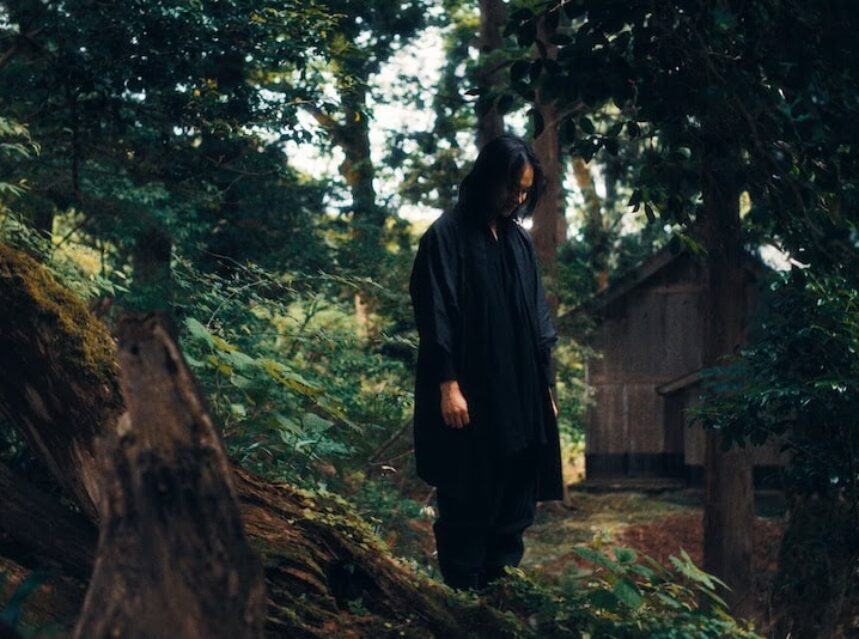
– Shares hypnotic new single “Desonata”
– Album ‘Migratory’ out this Friday, Sept 6th, via Erased Tapes

“Shimmering beauty” 8/10 — Uncut
“Music for reflection and meditation, held together by Fujita’s unique lightness of touch” ★★★★ — MOJO
“Migratory is gentle, companionable music — it feels like having a friend” 4/5 – NARC
“A meditative sound suite that takes flight” — Prog
Masayoshi Fujita, the Japanese vibraphonist and marimba player, is set to release his new album Migratory this Friday, September 6, on Erased Tapes. Today he shares his hypnotic new single “Desonata“, which follows on from his recent singles “Our Mother’s Lights” featuring Moor Mother & “Valley“.
On the track, Fujita said “I remember when I tried to record the melody for this song. While improvising with the backing track, I was hearing a melody in my head and tried to play it, but somehow I kept hitting different notes than what I wanted. When I listened back, it gave me a strange feeling, but I liked its unique mood and the new image it evoked, so I decided to use it for the song.”
“Desonata” on YouTube: https://youtu.be/M444VcsY9cM
In 2020, after 13 years of living in Berlin, Fujita returned to his native Japan with his wife and their three children, fulfilling his life-long dream of living and composing music in the midst of nature. The family found their new home in the mountain hills along the coast of Kami-cho, Hyōgo, three hours west of Kyoto.
Once settled in, Fujita spent his time turning an old kindergarten into his own music studio, Kebi Bird Studio, which became the birthplace of Migratory. On his new album, the composer and producer masterfully reimagines and mesmerises with his trademark sounds of vibraphone, and resumes his experimentation with the marimba and synthesisers that he first incorporated on his 2021 album, Bird Ambience, which followed the release of his acclaimed vibraphone triptych: Stories (2012), Apologues (2015) and Book of Life (2018).
On Fujita’s ever-evolving list of collaborators, Migratory introduces vocals from Moor Mother on “Our Mother’s Lights” and Hatis Noit on “Higurashi”, as well as shō and saxophone to its soundscapes.
Whilst at a music residency in Stockholm in 2021, Fujita met Swedish shō player Mattias Hållsten. Although it was a brief encounter, the two musicians stayed in touch. During a visit to Japan, Hållsten stopped by the studio and played on three of the tracks, including the alluring album closer “Yodaka”, exceeding Fujita’s own expectations.
Another collaborator, American poet Moor Mother asked Fujita to contribute vibraphone to her upcoming album, and in return lent her powerful voice to the Migratory’s centrepiece, “Our Mother’s Lights”.
As with Bird Ambience, Fujita continues to be inspired by our feathered friends. The album’s title, Migratory, originates from an image that came to him of migratory birds, travelling somewhere between Africa, Southeast Asia and Japan, imagining them hearing the music from the land underneath, and how their point of view of the world from above blurs the boundaries of music and land.
Expanding on this, Fujita says: “these ideas and images were inspired by my experiences of living abroad and returning to my homeland, as well as by the artists featured on this album who also somehow travelled or lived in other countries across the boundaries, and being influenced by the music of other lands but at the same time somehow led to their roots”.
Masayoshi’s parents too made a life abroad in Thailand for over 15 years. After returning to Japan, Fujita’s mother passed away in the beginning of 2023. So he invited his father to come for a visit, to spend time with him and his grandchildren. A lifelong musician in his own right, the two of them soon found themselves holed up in Kebi Bird Studio. Fujita senior had brought his saxophone, which he played on top of the then unfinished recordings, resulting in three breathtaking pieces. The slow jazz-tinged ‘Blue Rock Thrush’ stands out, with the saxophone and marimba blending harmoniously reaching new artistic heights.
Nature has always been a source of inspiration for Fujita, and on Migratory it takes centre stage. You can hear it on the album’s peaceful and considered field recordings, but most importantly, Masayoshi highlights – “nature is there as the image to be evoked by the listener from the music.” On the record’s sleeve notes, written by renowned novelist and travel writer Pico Iyer, we learn about the Japan that he hears as he sits down and listens to the music. It educates and encapsulates us, in the same way Fujita’s imaginary birds vividly depict the essence of musical migration.
Pre-order album: https://idol-io.ffm.to/migratory
Sleeve Notes:
Awakening to Rain
Here in Japan we live closer to the elements than anywhere else I know. It’s not just that, following the Chinese model, there are 72 micro-seasons in every year, speaking for the time of distant thunder or the days when frogs begin to croak. It’s not even the Shinto spirit that finds a god in every drop of rain or mountain shadow. It’s that our lives here are given shape and depth by the fire and earthquake and tsunami and typhoon that have defined the land for fifteen centuries and more. In Kyoto 234 trees are officially recognised as guardians of the ancient capital, as indispensable to its welfare as the wooden temples all around.
Think of a classic woodcut by Hiroshige: the human figures are almost faceless—anonymous shapes in a landscape whose real subject is the turning of the leaves, sudden snowfall, a mountain in the distance. Turn to a haiku and the writer disappears inside some much larger canvas of summer heat or birds returning to their nests at dusk. We’re part of an order that keeps cycling even as you or I come and go.
I think of all this as I listen to Masayoshi Fujita’s latest vibraphone and marimba recordings. One moment I’m underwater, immersed in a river that—as the classic 13th century Kyoto poet has it—is always moving even though the water remains the same. The next I’m up on a fog-encircled mountain, waiting for whatever treasures the parting clouds disclose. There’s no clutter of personality or agenda here; rather, a sense of deep responsiveness to the sounds all around, which come through as immediately as hard rain upon some pebbles, or a time-suspended day of snow.
Fujita has been crafting such aural landscapes through many seasons. But now that he has returned from a 13-year sojourn in Berlin to a mountain village in his native Japan—not far from where I have lived for 36 years—his closeness to the natural world is more absolute than ever. Space as much as time is dissolved as a sudden vocal from Hatis Noit on “Higurashi” gives us the clear beauty of the north, while the rippling intensity of “Our Mother’s Lights” with Moor Mother evokes a feeling available to anyone on any continent.
Pay close attention—the kind of attention Fujita’s work demands—and you can register all the tiny, almost indiscernible inflections that mark the movement of one season to the next, the passage of birds over water. Now, as I listen, I can see the sun rising over faraway peaks, now I’m somewhere between waking and sleeping as an early summer rainstorm blurs the sky. “Migratory” gives me the Japan where I sit (this week is the season called shoman, the time when silkworms feast on mulberry leaves), yet it belongs to anyone who has seen pine trees, mountain streams, the calm of starlit nights. This is a traveller’s work about the wonder of being home.
— Pico Iyer, May 2024
Nara, Japan
Migratory artwork (by Bernd Kuchenbeiser):

Migratory tracklist:
1. Tower of Cloud (YouTube)
2. Pale Purple
3. Blue Rock Thrush
4. Our Mother’s Lights (feat. Moor Mother) (YouTube)
5. Desonata
6. Ocean Flow
7. Distant Planet
8. In a Sunny Meadow
9. Higurashi (feat. Hatis Noit)
10. Valley (YouTube)
11. Yodaka
Previous praise for Masayoshi Fujita:
“Meditative pieces with a minimalistic pulse” — New York Times
“Uncanny sense of both depth and weightlessness” – Pitchfork
“An impressive exercise in ambient soundscaping” — Financial Times
“Dreamy textures” — The Fader
“Such a beautiful thing” — Mary Anne Hobbs, BBC 6 Music