
Reasons to be Cheerful: The Spark: Maximize the mirth, minimize the waste


 How “free stores” replace commerce with community
 Create an alternative gift registry to cut waste
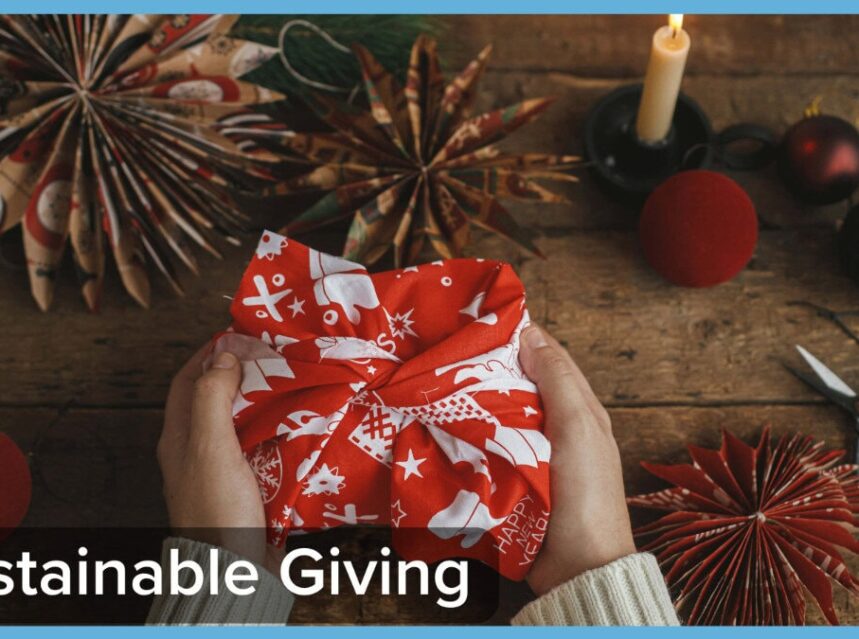
 Giftwrap is out –– furoshiki is in
Welcome to the Hell’s Kitchen Free Store. “What I love most is that we don’t have a bank account. We don’t have a till, any money to sustain us at all. It is all done through donation,” says Martha Gelnaw, who has been volunteering with the project from the start. “Everybody feels good on both the giving and the taking side.”
The project grew out of neighborhood swap parties run by social worker and community organizer Chana Widawski. In March 2021 she recruited a group of volunteers to put up shelves in the disused side entrance of a closed business on West 45th Street in Manhattan, turning it into a 24/7 public storefront where people could leave and take items based on their needs, with no cash changing hands. The inventory evolved organically from day to day, with volunteers chatting to interested passers-by and keeping the store tidy and clean. It immediately attracted interest –– as much for the comradery as the promise of free stuff. “It became a community center, a gallery, a place to get things,” remembers Widawski. “It’s about the intersection of waste diversion, mutual aid and community building.”

Free stores offer an alternative –– finding new treasures and getting rid of unwanted items while bypassing the spend-to-waste pipeline. “It’s such a feel-good thing,” says Gelnaw, who also enjoys selecting small gifts for her grandchildren at the store.
They come in all shapes and sizes, from brick-and-mortar shops to permanent public spaces and regular pop-up events, the latter sometimes also called Really Really Free Markets. “It doesn’t have to be a giant 24/7 thing instantly. Mine started as a community event that I did once, and then it was successful, so I did it again,” says Widawski. Another option is to start by focusing on a certain type of item, similar to Little Free Libraries and community cupboards.
When the Hell’s Kitchen Free Store lost its permanent location due to a change in building management in 2023, the volunteer team quickly rallied and started organizing monthly pop-up events in partnership with the Ryan Center. “It’s not that hard. Put your tables out, take stuff in, give it away,” says Gelnaw. “It’s so doable.”
In addition to partnering with local organizations, the key to a successful free store is the cohort that makes it happen, says Gelnaw. “Sustaining a volunteer group is an art.” Their group coordinates via WhatsApp and monthly meetings, with people pitching in in various ways –– some volunteer at events while others print flyers, prepare banners, or source new tables as needed.
“It was a very important element of our model that anyone could pitch in to do whatever they can, when they can, however they can,” says Widawski. “It’s okay. You’re part of the community. This is yours.”
Read a step-by-step guide to starting a free store in your community here.

See a sample family holiday wish list from SoKind here.
Learn different furoshiki wrapping techniques from this infographic by the Japanese Ministry of the Environment.


By: MaryLou Costa


By: Anna Patton