
Liner note interview from African Head Charge’s Voodoo Of The Godsent
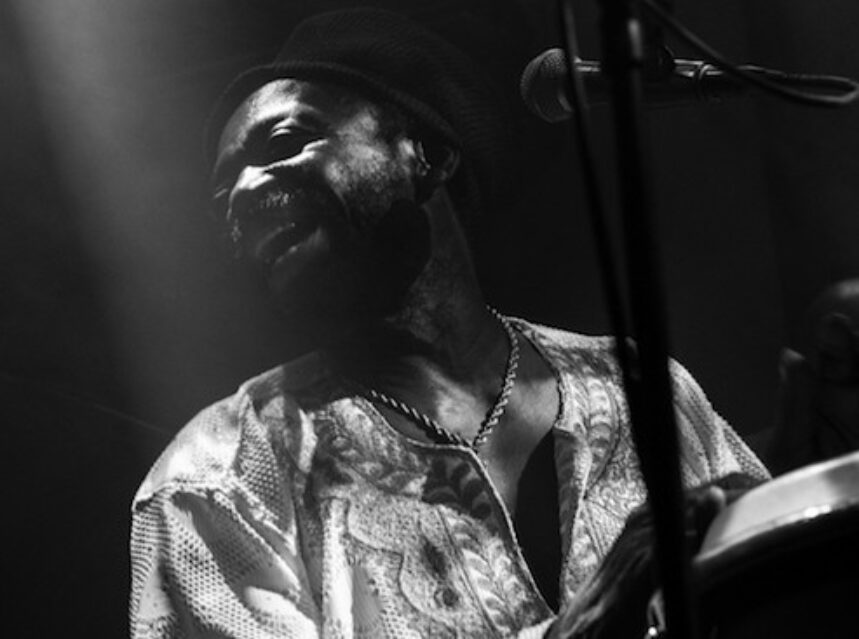
liner note interviews from African Head Charge’s Voodoo Of The Godsent – one of 5 archival releases comingInboxx
The liner notes to Voodoo Of The Godsent, one of the On-U Sound re-issues of vintage albums from seminal experimental dub outfit African Head Charge. The label is now re-issuing four studio albums in all, originally released 1990 – 2011, alongside an album of unreleased music from the 1980’s and a 5 CD box set. I’m hoping you’ll consider covering this release via album reviews or interview. Please let me know if you need the music.Part one of the epic reissue campaign On-U Sound started in 2016 with the reissues of the crucial early years of African Head Charge, the long-running collaboration between master percussionist Bonjo Iyabinghi Noah and maverick UK dub producer Adrian Sherwood is what’s discussed in the coverage below.
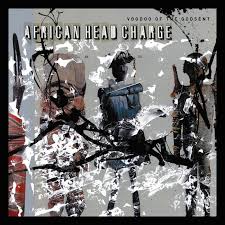
Voodoo Of The Godsent was the first new recording in six years from African Head Charge following the ‘comeback’ album Vision Of A Psychedelic Africa. It found Bonjo once again joining forces with long time On-U stable-mates Skip McDonald, Crocodile, and The Crispy Horns, together with contributions from legendary bassist George Oban (Aswad/New Age Steppers), dancehall pioneer Jazzwad and electronic wizard Adamski. Housed in a striking abstract sleeve design by Chris Bigg (v23/4AD) that connects the album back to the enigmatic afro-futurist presentation of the bands early records, all the elements of a classic African Head Charge album are present: spaced out dub, tribal chants, ecstatic trance, but updated with a rugged sound system undercarriage.
Arguably some of the hardest hitting AHC rhythms laid down in the studio to date. In summer 2018 we sat down with Bonjo to talk about the record: So Voodoo of the Godsent is the most recent AHC album to date. what can you tell me about the process of making that?
We did that record in Ramsgate, down at Adrian’s house. I think the next album we’ll do there as well. It’s good, I can go there spend a few days there, wake up in the morning, straight in the studio, work until the night, stop when we want to, do anything you know? So that’s the good thing about him being up there, lots of creativity, we have time to do plenty things. George Oban provides some beautiful basslines…Yes, the original Aswad bass player, he’s something else. Whenever Adrian can get him to do a session he’ll do it. It’s the same thing with people like ‘Blackbeard’ (Dennis Bovell). Any time players of that quality are available to do something, then we’ll try and get them. On “Take Heed and Smoke Up Your Colly Weed” there’s a sample of Prince Far I, which completes the circle of when you started working with Adrian with Creation Rebel.
What are your memories of Far I?
When I look at Prince Far I, it reminds me of one of these great prophets in the bible! When you see the way he dresses, everything about him, like if he came in this room you’d feel as if one of the greats has come in. To me he wasn’t like a normal person – out of all the musicians I’ve known, Prince Far I, Lee Perry … they’re not normal. When I say ‘not normal’ I don’t mean it in a bad way, it’s more like they’re something else. You read about Matthew, Mark, John, Luke – all these disciples, that’s how I felt when Prince Far I walked in the room. He had a presence, the voice, everything. To me that was a big loss, tragic (Ed’s note, Prince Far I was shot and killed in September 1983). It freaked Adrian out, I’m telling you that was a knock-out blow for him. When it comes to people – I think Prince Far I is the number one for Adrian. I remember the first time I met him, I had a band called Fusion. We had a gig at The Music Machine in Camden Town (editor’s note, still standing, it was later re-named the Camden Palace and now called Koko). The bill was Prince Far I as the headliner, Fusion, and Generation X (with Billy Idol)! Generation X went and did their show, we went as Fusion and did our show, then we’re in the dressing room and we saw Prince Far I walk in and say “Who can play Satta Massagana?!”. I said “Yeah man we know them tune there man”, and he goes “right you’re playing with me” – he’s the top of the bill and he came without a band! So we all sat down, learn the things, then out on stage! That was our first time meeting Prince Far I and we did the gig there and then. The only problem was we were arguing about money! We knew he needed us so we stuck to what we wanted, because if we didn’t do it he had no one, so we decided to stick to get the extra £10 or whatever.

You were very prolific in the ’80s, releasing lots of records, then it slowed down a bit. Was that partly through prioritising family and being a father, and your life in Ghana?
A lot of changes happened in the music business, big changes happened. We were selling a lot of records until everyone started downloading, then I saw there was a big change. Even the distributor went bankrupt! That was a big fuck up for us, because we were owed a lot of money. That fucked Adrian up too, because most of the money was his investment. That was when the whole thing started to go down.
Alright, we must have money because we have children to look after, but for me, it was just the music. I love playing music and I love performing live. One reason why we love to play live is because we see the people’s faces and they love it!
We see the feeling of the people and that’s what keeps me going, because I see that the people them like it. When we’re backstage getting ready to go on, you feel the vibes of the people them, knowing that they’re gonna have a good time. I’m a pensioner now – I could go to Ghana and just relax, it’s like heaven there. But one of the reasons I’ll come here, every year, and spend three or four months is because I can see that the people them love what we’re doing. They love it. If I didn’t feel that they love it, I’d stay in Ghana and enjoy the rest of my life there.
Looking at some recent footage of you, the audience is very diverse, it’s all ages!
Yes! I’m surprised as well. When I look out, I see young people. I’m expecting to see people in their 40s and 50s and that, but I’m seeing people in their 20s. I couldn’t believe it. What’s an average day in the life of Bonjo like?What I love to do in Ghana or in London, first thing when I get up, is go and do some training, keeping fit. I’m addicted to training. I like to go to the gym for at least two hours every day. Then I feel better for the rest of the day. After that, anything can happen. When I’m in Ghana, I do the same thing. I just go train, come back, and just enjoy life. I’m just enjoying my life. Seriously! That’s the truth!
Do you have family in the UK as well?
Yes I have some big children here from my first marriage. Most of them in London but some of them are spread out – some in Nottingham, one of them’s got married and gone to live in America. I’ve got more children in Africa. Somehow God has blessed me with eleven children, and I think I want some more! So I’m going back to see what’s going to happen. What’s the future of African Head Charge? Can you tell us about the new record and your life plans?I will always keep making records, and because I’ve got this thing with Adrian and Skip, we can do a lot of things. So we’ll keep doing that, that’s a good combination. And once there’s a good combination, you should keep it, especially on the recording side of things. I love to do live things as well, I love to do the clubs and the festivals. One of the reasons why I love the clubs is that although the clubs doesn’t pay me as much as the festivals, you can actually touch people, they’re close to you. It’s like having a big party!
This new series picks up the story in 1990 with the album that is widely regarded as their masterpiece, Songs Of Praise. It’s been expanded to a double album with a whole raft of bonus tracks, as has 1993’s In Pursuit Of Shashamane Land. 2005’s Vision Of A Psychedelic Africa and 2011’s Voodoo Of The Godsent are pressed to vinyl for the first time, both as double LP sets, and as a companion piece to the Return Of The Crocodile LP of early rarities, Churchical Chant Of The Iyabinghi compiles alternate mixes and dubs from 1990 -1993. Each vinyl LP comes with a double-sided 24″ x 12″ poster containing an exclusive new interview with Bonjo in 5 parts alongside rare photos. All of the contents from the vinyl reissues are also anthologized in the 5CD and 36 page book box set, Drumming Is A Language, the companion set to the acclaimed Environmental Holes & Drastic Tracks.
About African Head Charge
African Head Charge started life as a studio recording project in 1981 when the percussion talents of Bonjo Iyabinghi Noah combined with the studio wizardry of Adrian Sherwood. Bonjo had come to England from a Rasta camp in the hills of Clarendon, Jamaica. From as early as he can remember he studied and played percussion, learning not only Rasta/Nyabinghi drums but also African and Afro Cuban rhythms. He also loved to experiment, which made working with Sherwood perfect. Working with tape loops, manipulated and vari-speeded 1/4 inch tape that was re-recorded back to the multi-track tape, reverbs and delays, this was then applied to the performances of the musicians. And so the first psychedelic African dub LP My Life In A Hole In The Ground was created. It was not until the late 1980s that African Head Charge made its first appearance as a live band, taking place at the University of London (ULU) and instantly a sold-out success. What followed in the next few years gave them semi-legendary status, with performances at festivals such as Glastonbury and Womad, and visits to Australia, New Zealand and Japan. Three more largely experimental studio albums followed throughout the 80’s: Environmental Studies (1982), Drastic Season (1983) and Off The Beaten Track (1986). The latter has been hailed as both a seminal recording in the progressive use of sound-bite technology and an excellent example of the integration of live instrumentation and programmed music.
1990 saw the release of the Songs Of Praise LP widely acknowledged as their masterpiece. It featured religious chants from different parts of the world set to an African dub backdrop of multi-layered percussion and demonstrated another evolution in their sound. It was followed by the complimentary In Pursuit Of Shashamane Land album in 1993. In 1995 Bonjo left London to start a new life in Ghana and it was not until 2003 that he made a return visit to London and renewed his partnership with Adrian Sherwood on Vision Of A Psychedelic Africa, released in 2005. Voodoo of the Godsent is their most recent studio album, described by the label as being ‘the culmination of thirty years of endeavour.’ In 2016 On-U Sound put out vinyl reissues of the first four African Head Charge albums, which had become increasingly sought after by DJs and collectors. These were followed this up with an LP of unreleased tracks and version excursions from from that same early-80s period, Return Of The Crocodile, carefully transferred from the original decaying tapes and sequenced for release by On-U archivist Patrick Dokter.African Head Charge have returned to the live stage in recent years with a line-up featuring original African Head Charge members and augmented by the electronics of Gaudi (recently heard on Lee “Scratch” Perry’s Rainford and Heavy Rain). The current show fuses together djembes, guitars, drums, keys and vocals with heavy electronic sampling and visuals. The collective use this blend of live and electronica to generate an intoxicating soundscape of reggae-inflected drumming, visceral vocals and bottomless, thrumming bass-lines that truly reach to the heart of your being.Buy/Stream/Pre-order link: https://on-u-sound.ffm.to/ahcdrum
About On-U Sound
On-U Sound is an iconic independent label with a treasure trove of remarkable music, and sits in a unique position historically as a junction point between the heavy influence of Jamaican music on UK culture and the development of disparate sounds such as post-punk, hip-hop, industrial, jungle, dubstep and beyond.The label emerged from a fertile UK DIY scene that birthed contemporary imprints such as Rough Trade, 4AD and Factory. Since 1981, with label boss and producer Adrian Sherwood at the helm, On-U Sound has released over 100 albums and singles and launched the careers of countless artists.As a producer, Adrian has worked with The Slits, Cabaret Voltaire, Nine Inch Nails, Ministry, The Fall, Sinead O’Connor and more. His remix credits include Depeche Mode, Afrika Bambaataa, Blur, Primal Scream, Air and Peaking Lights. Key On-U Sound artists include Lee ‘Scratch’ Perry, Tackhead, Dub Syndicate, African Head Charge, New Age Steppers, Singers & Players and Bim Sherman.In 2015, Adrian continues to be in-demand for his unique sonic vision as a producer and he tours globally with his unique live mixing/DJ hybrid sets. There is also a major project underway to reissue and reappraise the amazing back catalogue of classic records that have been released on the imprint, with represses of classics sides, retrospective compilations such as the Sherwood At The Controls volumes and Science Fiction Dancehall Classics, rare cuts from the vaults, all complimented by critically acclaimed new productions with Pinch, Nissennenmondai, Roots Manuva and Lee “Scratch” Perry. The label recently scored their first Billboard number 1 with Heavy Rain, a dub album co-produced by Perry and Sherwood and featuring guest musicians including Brian Eno, which hit the top of the US reggae charts on release.
http://on-usound.com/https://onusound.bleepstores.com/
https://on-usound.bandcamp.com/https://open.spotify.com/user/onusound?si=HJ65tVbaStG6_kMld5m75Q
https://www.youtube.com/user/onusoundrecords
https://www.instagram.com/onusound/https://www.facebook.com/onusound/https://twitter.com/onusound