
Melody Gardot: June Release For ‘Currency Of Man’
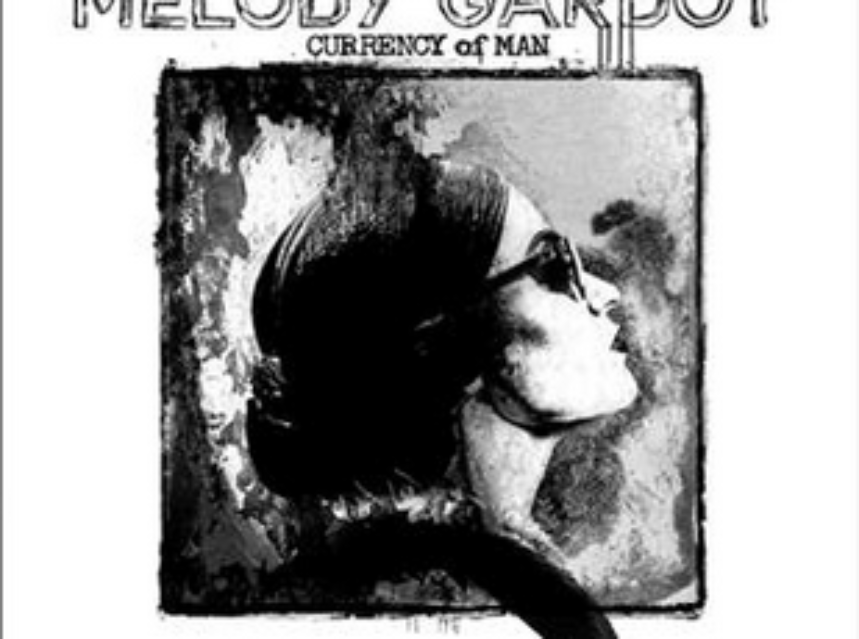
MELODY GARDOT presents ‘CURRENCY OF MAN’ Released 1st June on DECCA RECORDS
When we last heard from Melody Gardot, her globe-trotting travels had inflected her trademark sound with exotic new flavours. With her new album ‘Currency of Man’, Melody takes us on another musical voyage. This time she has travelled not to new places but back in time for musical inspiration, while rooting her lyrics in a social consciousness that inescapably and urgently speaks of the here and now.
With its funky bass rhythms, wailing wah-wah guitars and swirling psychedelic organ, its retro-soul brass arrangements, euphoric gospel singers and esoteric orchestrations that evoke Bond and Burt equally (James Bond; Burt Bacharach), the songs on ‘Currency of Man’ are the very antithesis of ‘smooth jazz’. In a radical departure that is sure to shock more conservative fans, they transport us back to the late Sixties and early Seventies. Sashaying through the middle of this melange of steamy Seventies soul and funk is Melody Gardot, the Grammy-nominated international best-selling singer, songwriter and self-styled “citizen of the world.”
Beneath the new-found musical exuberance lie a series of sharp observations of tumultuous times in our troubled world. Snatches of radio static and crackly voices collected from field recordings lend a documentary air that serve to underline the social dimension of songs centred on real-life characters observed on the streets of Los Angeles, where ‘Currency of Man’ was recorded. Food banks and soup kitchens feed the helpless, homeless and hungry; race and religion tear our planet apart as never before for centuries past; war, famine and poverty are our constant companions. And, amid the chaos of a world turned upside down, the universal search for love, truth and peace goes on.
These are the subjects Melody addresses on ‘Currency of Man’: her fourth studio album and a brave new departure for an artiste who has constantly stretched definitions of her music since she burst on to the music scene in 2006 with the spare, smoky piano jazz of ‘Worrisome Heart’. Mainstream success followed with its 1.5 million-selling successor, ‘My One And Only Thrill’, for which she teamed up with legendary Grammy Award-winning producer Larry Klein, introducing tropical elements to her music. That global influence expanded further on 2012’s lavishly orchestrated ‘The Absence’, a critically acclaimed development in which Melody’s travels in Argentina and Africa, Brazil and Portugal, introduced the exotic rhythms of samba, tango, bossa nova and calypso to her sound.
Click here to watch the video for ‘Same To You’:
‘Currency of Man’ finds Melody reunited with producer Larry Klein (Joni Mitchell, Herbie Hancock, Madeleine Peyroux), and – to the huge surprise of her fans, no doubt – swapping her piano for an electric guitar on many tracks. It’s an album that expands her style further than ever before to encompass blues, soul, funk and much more besides, marked by Melody’s distinctively sultry, smoky, sexy vocal style. ‘Currency of Man’ is an album whose appeal will bring Melody far beyond the world of jazz: you might read reviews and not hear the J-word at all. If you are looking for a polished record, you won’t find it here. Raw, passionate and unrestrained, it’s a record that won’t wash over you like a cool breeze – it slaps you in the face like a spurned lover… then pulls you close for something more intimate and physical.
“The writing for this record wasn’t like anything I’d ever done before – it was all reflective-collective. Less personal, and more observatory,” she explains. “There was no censorship on the stories. It’s a commentary. It’s not about love, it’s not about desire, it’s not about fantasy… It’s about life, and the people living it – right now.” She adds: “I think our job as artists is to put on our lenses and look at the world and see how that makes sense to us, and how that makes sense to other people. After spending time in LA, the songs all became about the people I’d meet: people who were experiencing life on the fringe.”
The cinematic orchestrations, strongly reminiscent of Norman Whitfield’s psychedelic soul work with The Temptations for Motown, are by young French arranger Clément Ducol. Klein says approvingly: “Clément has a style of writing for strings that I think is distinctly French. For me it brings to mind a lot of the painting of the Impressionists and some of the writing of Debussy.” The horns are arranged by Jerry Hey, whose licks fizz around the street scenes painted on songs like “She Don’t Know” and add a new dimension to Melody’s sound, further emphasising her progression and evolution. “We have a slamming horn section and these cinematic and somewhat existential arrangements,” she says. “It’s a body of work where Larry and I discover an electric side of the songs, something I’ve never done before… It’s all an exploration, but it feels good to have something new, and even a bit strange.”
The method of the recording reflected Melody’s new determination to keep the album rooted in reality, ditching digital methods in favour of analog equipment – old microphones and vintage tube amps. “All our decisions about sound were made with the help of Maxime LeGuil, this amazing French engineer who possessed a great knowledge about vintage machinery,” says Melody. First single ‘Same To You’ is a hot blast of finger-snapping funk, full of gospel-style backing vocals and blasts of brass. ‘Morning Sun’ is a gentler, piano-led shuffle full of soulful vocals and muted horns and ‘Bad News’, a stripped-back slice of Delta Blues, is a new addition to the well-worn repertoire of drinking songs: “The bad news has arrived,” Melody slurs, as a saxophone wails into an empty bourbon glass and muted trumpets echo her sad desperation. “It’s closing time.”
The most political song here is ‘Preacher Man’ – also earmarked as a future single, with a highly political black-and-white video echoing the recent film ‘Selma’ – which highlights the ongoing issue of racial prejudice through the story of Emmett Till, a black teenager in 1950s America, whose racially motivated murder marked a landmark moment in the Civil Rights movement. The powerful gospel choir backing Melody turns out to be formed by fans from Facebook who ‘auditioned’ by sending her their voices on home recordings, for the massed voices that open the song. Older fans will find more familiarity in ‘No Man’s Prize’ (extra track on Deluxe Edition ‘The Artist’s Cut’) and Ducol’s arrangements bathe the ballad ‘If Ever I Recall Your Face’ in their warm embrace.
“I wanted an album that flowed like a dream from beginning to end. We wanted to weave in sounds of the world around the songs, to recall the places where they were born, to really paint the scene. These are stories about people who know hard times, about people who are struggling to overcome them, and that is something that resonates deep in my psyche. It’s impossible to ignore. To me, the songs are questioning and also defining what it means to be alive. What is our worth, and how do we define it? Is it down to money? Is it down to legacy? Is it down to our own personal achievements on a daily basis?
“This album is about our worth in this world, and how everyone no matter their status, or origins or colour of their skin holds a purpose. Larry and I from the start had wanted to make a kind of movie within the music. It’s not an ordinary project, and the idea of this disc in particular, was to show the listener with eyes closed, the faces of the lives of the people that inspired these stories…I think we did that.”