
Mojave 3 – Long-Awaited Reissues
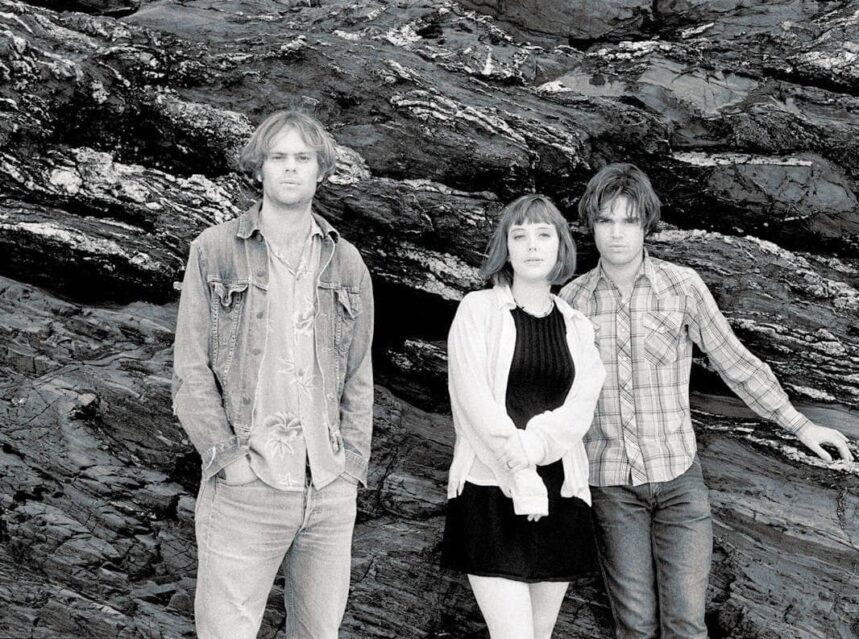
Mojave 3 Finally Back in Print
‘Ask Me Tomorrow’, ‘Out of Tune’, ‘Excuses for Travellers’, ‘Spoon and Rafter’ & ‘Puzzles Like You’ available now

All five records by Mojave 3 are now back in front as of today, Friday July 24.
Remastered at Abbey Road, Ask Me Tomorrow (1995), Out of Tune (1998), Excuses For Travellers (2000), Spoon and Rafter (2003) and Puzzles Like You (2006), will each be available digitally, on Standard Black LP and CD, and as a 4AD exclusive slipcase [SOLD OUT] comprising all five albums on Clear LP with an 8×10” print. Ask Me Tomorrow features newly updated artwork of photographs by Colin Gray, while all other albums are presented with their original artwork.
+ Buy on all formats from the 4AD Store here +
+ Listen on all digital platforms +
In the year between the recording and release of Slowdive’s 1995 album Pygmalion, the Reading five-piece had unravelled. With their longtime drummer having already quit, both their guitarist and bassist were also throwing in the towel, leaving only songwriter and defacto leader Neil Halstead, founding vocalist-guitarist Rachel Goswell, and newly acquired drummer Ian McCutcheon.

But even before that album was released by Creation Records, who then officially dropped the band a week later, the loose strands of Slowdive were already in the middle of a rebirth. While simultaneously finishing Pygmalion and recording an instrumental soundtrack for the film, I’m the Elephant, U Are the Mouse, Neil found himself being pulled in a new musical direction, one inspired by the great singer-songwriters and country/folk-rock of the Sixties and Seventies.
“It was sort of an exercise in songwriting really,” says Neil. “I wanted to go back to something more basic by writing songs on an acoustic guitar. It was a different process to Slowdive, where the songs came out of sounds and atmospheres. By the time we got to Pygmalion the process was about creating samples and loops. It was music created in Cubase and much as I enjoyed that process and the weird ambience it produced, I was ready to try something else.”
Taking advantage of a still-good publishing deal with EMI, Neil pulled Rachel and Ian into the studio — along with Rachel’s partner, pianist Christopher Andrews — and recorded six sparse, acoustic, vocally-driven tracks that stripped away the swirling guitar distortion that had once cloaked their singing in a veil of mystery, leaving Neil and Rachel’s vocal harmonies to stand fully exposed.
Then, with no real idea of what to do with the recordings, Neil embarked on a multi-month journey travelling through Israel, Jordan and Egypt.
“That trip was really important to me,” Neil reflects, “as it sort of doubled down on wanting to make more acoustic music. I was spending a lot of time in hostels where there’s always a guitar lying around, and people would be like, ‘Oh, you’re a musician? Play us a song,’ and I really struggled because I’d spent my whole musical life playing guitar through a load of effects. I ended up playing a lot of acoustic guitar on that trip, and by the end of it, it felt like I had a better understanding of a different kind of music, and I brought that with me for the rest of the Mojave 3 journey.”

Back home in London, Rachel had taken it upon herself to share the recordings with 4AD label head Ivo Watts-Russell.
Neil recalls, “I’d probably been away for a couple of months when I phoned up my mum to check in, and straight away she said, ‘You need to get a hold of Rachel. She’s trying to find you.’ I called Rachel up and she said, ‘I gave the tape of those songs we did to Ivo. He wants to put them out as a record.’”
With 4AD signing the group to a five-album deal, they left the original demos essentially untouched, returning to the studio to record three more songs with help from Chapterhouse guitarist Simon Rowe and cellist Audrey Riley.
Up to this point, the group had been operating as if they were still Slowdive, with Ian recalling, “It was only while we were mastering the record at Abbey Road Studios that we thought, ‘should we call it Slowdive, or will it be something else?’”
“We all agreed that it was a different band and without Nick and Christian it should have a different name,” says Rachel.
When a friend of the band observed that the music had a desert vibe to it, they decided to call themselves Mojave. After discovering a German band was using the same name, they added a numeral and became Mojave 3.

Mojave 3 – Ask Me Tomorrow
4AD0826
A1. Love Songs on the Radio
A2. Sarah
A3. Tomorrow’s Taken
A4. Candle Song 3
B1. You’re Beautiful
B2. Where Is the Love
B3. After All
B4. Pictures
B5. Mercy
+ Buy from the 4AD Store here +
Released in October 1995, Ask Me Tomorrow could have easily been the fourth Slowdive album, sounding like an acoustic deconstruction of the group’s early recordings, still dreamlike and ethereal but recontextualized by discernible lyrics and a country-folk aesthetic.
“annelling the sorrowful songwriting of Leonard Cohen, Nick Drake, Townes Van Zant, and Fairport Convention, as well as contemporaries like Mazzy Star, Tindersticks, and Cowboy Junkies, this tone is set by the transcendent opener “Love Songs on the Radio,” in which Rachel’s angelic vocals are suspended in air by slow, sleepwalking guitar and minimalist bass and drum flourishes.
“I sang that song sitting on a mattress in the kitchen of Neil’s flat,” Rachel recalls. “It was exciting because I really enjoyed the songs, and it felt like this entirely new thing was forming with only me, Neil and Ian.”
“It was a very easy record to make, very off the cuff,” Ian confirms. “The atmosphere had been so toxic at the end of Slowdive, that it just felt so positive to be starting over with Rachel, Neil and myself, having a good time doing something completely different.”
We put quite a lot of reverb on the vocals,” Neil recalls of the primitive recording style, “and because we were all in one room recording straight to tape, there was a lot of bleed, it made everything sound really reverby. It gave the mix this really cool, murky sound and sort of inadvertently bridges the gap to Slowdive a little.”

Mojave 3 – Out of Tune
4AD0827
Tracklisting
A1. Who Do You Love
A2. Give What You Take
A3. Some Kinda Angel
A4. All Your Tears
A5. Yer Feet
B1. Caught Beneath Your Heel
B2. Keep It All Hid
B3. Baby’s Coming Home
B4. To Whom Should I Write
After playing with the band on their first tours of the US and Europe, Simon Rowe and organ/piano player Alan Forrester had joined the group full-time for the next record, essentially turning Mojave 3 into Mojave 5. Not only that, but the four men in the band also moved into a farmhouse in Cornwall, building a small studio in a cowshed where they demoed songs for what became Out of Tune.
“It was a real communal experience living on this village farm with Ian, Alan, and Simon, and a few other friends,” says Neil. “It was our own little Big Pink.”
“That was a real Band-y sort of atmosphere,” agrees Ian, “very old school, with everyone learning their parts and playing at the same time. Our sound became bigger, more raucous and poppy, as a result.”
“I was living in London and coming down to stay for a few weeks at a time,” says Rachel. “We were young and just really having fun with it.”
Based on his work on Belle & Sebastian’s If You’re Feeling Sinister, the band hired producer Tony Doogan and decamped to Cava Studios in Glasgow to properly record Out of Tune, which turned into a long process of remixing, rerecording, and adding new elements like pedal steel and brass. While the procedure was laboured, the highly polished result is a bright, largely upbeat record that showcases a new sophistication in Neil’s lyrics while sounding much more like Neil Young, Bob Dylan, and Gram Parsons than anything resembling Slowdive.

Mojave 3 – Excuses For Travellers
4AD0828
A1. In Love with a View
A2. Trying to Reach You
A3. My Life in Art
A4. Return to Sender
B1. When You’re Drifting
B2. Any Day Will Be Fine
B3. She Broke You So Softly
B4. Prayer for the Paranoid
B5. Bringin’ Me Home
B6. Got My Sunshine
With the band returning to London to work and live at the famed Fortress studios, Excuses for Travellers was the first of two consecutive albums recorded with the help of friend and electronic artist Mark Van Hoen. Combining the melancholy and stripped-down intimacy of Ask Me Tomorrow and the Laurel Canyon soul of Out of Tune, it finds the band refining their touch to create a more cohesive record that rightfully sits at the middle of their ever-morphing sound.
“With Out of Tune I was sort of obsessing a little too much over Bob Dylan and Neil Young,” says Neil, “whereas on Excuses for Travellers the influences had been absorbed a little more, and the band made it into its own thing. Mark’s production really helped as well.”
Lusciously textured with restrained guitar, drums, pedal steel, horns, and piano, it’s an introspective campfire record that lets Neil’s voice and songwriting take centre stage (“In Love with a View,” “My Life in Art,” “She Broke You So Softly”), while also featuring the only two Mojave tracks solely credited to Rachel (“Bringin’ Me Home”) and Ian (“Got My Sunshine”).
Reflecting on his growth as a songwriter, Neil says, “Unlike Slowdive, where the music is at the forefront and nobody is focusing on what anyone’s saying, you couldn’t really hide the lyrics with Mojave 3. I had to think about them more, work harder on them.”

Mojave 3 – Spoon and Rafter
4AD0829
A1. Bluebird of Happiness
A2. Starlite #1
A3. Bill Oddity
A4. Writing to St Peter
B1. Battle of the Broken Hearts
B2. Hard to Miss You
B3. Tinkers Blues
B4. She’s All Up Above
B5. Too Many Mornings
B6. Between the Bars
+ Buy from the 4AD Store here +
Never ones to sit still, Spoon and Rafter marked another shift for the band. While still containing echoes of singer-songwriters and alt-country, the record represents a Technicolor expansion of their palette that utilizes electronics, glockenspiels, melodica, and Beatlesque production.
“It’s quite a bonkers album, really,” says Ian. “By that stage we had our own studio again on the north Cornish coast in the UK. We had time to pick up different instruments and just faff around. It was quite a process, but it’s my favourite record we did.”
“We sort of entered our Beach Boys phase of Mojave 3,” says Neil, “where we became more interested in different instrumentation and a fuller sound. Thanks to Mark [Van Hoen] it was the first time we used an early Pro Tools system to edit stuff together, so some of the tracks are much longer and more orchestrated, like ‘Bluebird of Happiness,’ which has three different sections that were all recorded separately and then chopped together.”
And while Mojave 3 had few instances of breaking into mainstream culture, album cuts “Bluebird of Happiness” and “Bill Oddity” were poppy enough to both be featured in 2003 episodes of The O.C.

Mojave 3 – Puzzles Like You
4AD0230
A1. Truck Driving Man
A2. Puzzles Like You
A3. Breaking the Ice
A4. Running with Your Eyes Closed
A5. Most Days
A6. Big Star Baby
B1. Ghost Ship Waiting
B2. Kill the Lights
B3. You Said It Before
B4. To Hold Your Tiny Toes
B5. Just a Boy
B6. The Mutineer
+ Buy from the 4AD Store here +
By the time of their final album, Mojave 3 had journeyed a long way from the dreamy, country-tinged sadcore they started with. Reminiscent of the late days of Slowdive, both Neil and Rachel had released solo records, Ian was playing in other bands, and Neil was once again going off on his own to finish the album himself.
Leapfrogging the sonic direction of their previous album, Puzzles Like You brings in jangly Byrds guitars and uptempo Sixties pop melodies for a positively bright and fun record that feels right at home next to indie rock contemporaries like The Shins and Band of Horses, while sounding nearly unrecognizable next to the band they were on Ask Me Tomorrow.
“It’s a much perkier, more ‘indie’ record,” says Neil, “although there’s still some quite nice country stuff on there. ‘Most Days’, ‘Big Star Baby’, and Ian’s song ‘The Mutineer’ are some of my favourite songs that Mojave made.”
Sadly, after recording her vocals for the album, Rachel entered a period of illness that would prevent her from touring or recording for several years. Combined with the fact that their five-album deal had been completed, Neil had a growing solo career, and they never sold enough records to live off of in the first place, the band seemed to be reaching its natural conclusion. And so (after briefly reforming for a 2011 tour) Mojave 3 disappeared, blown away by the desert sands they came from.
Over the next few years, the shoegaze sound Neil and Rachel first made together was discovered and mythologized by a new generation, and it was Slowdive’s turn to be reborn, becoming bigger and more beloved than anyone could have imagined.
As a result of their unpredicted success, Mojave 3’s own myth has grown, resulting in their records being some of 4AD’s most requested reissues of the last decade. With these 2026 reissues putting all five albums in print once again, perhaps it’s Mojave 3’s time to rise from the ashes and fly once again