
Reasons to be Cheerful: The Spark: Bringing biodiversity to your own backyard
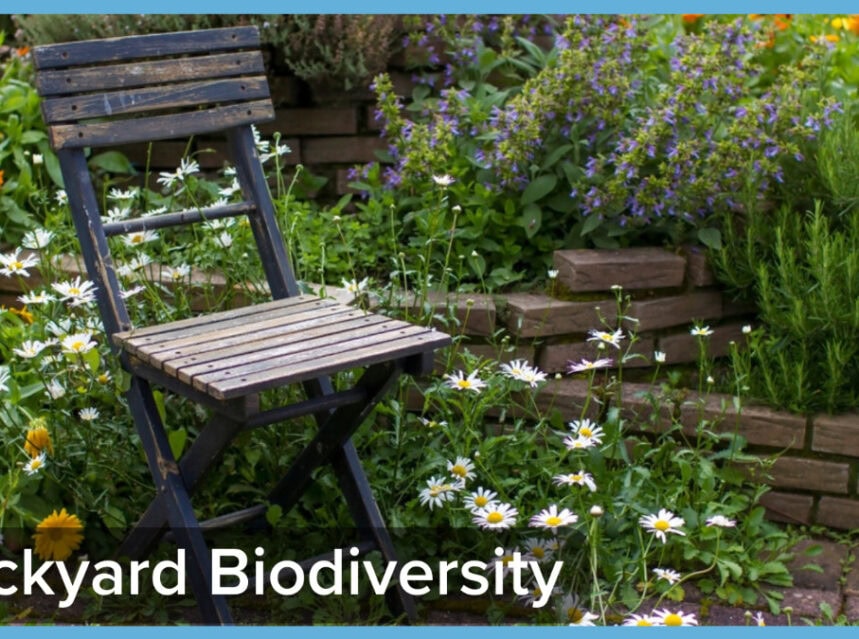


 Simple tips for restoring biodiversity to the land around your home
 How to start a seed library
 Help monitor coral reef health without ever putting on a swimsuit
The experience inspired him to co-found Homegrown National Park, a grassroots conservation initiative helping people regenerate biodiversity on their land by removing invasive plants and adding native ones. Ninety percent of the insects that eat plants can only eat those they co-evolved with, explains Tallamy. “So when you load the environment with a non-native plant it’s essentially removed from the food web.”
Few non-native plants are as beloved by Americans as turf grass — lawns cover 40 million acres of land in the U.S., equivalent to the size of Colorado. In addition to using up to nine billion gallons of water daily, they provide next to no value to local biodiversity. But anyone can reintroduce key ecosystem functions to their back yard or front lawn, says Tallamy — and it doesn’t have to be all-or-nothing. “Any way that you can reduce the area of your lawn is a valuable contribution.”

Those looking to start small can remove parts of their lawn and create islands of native keystone species, balancing a more manicured look with wildlife-friendly areas. This can also pacify unsupportive neighbors or homeowners’ associations, says Tallamy. “Most people don’t know a native plant from a non-native one, but they do know sloppy from neat.” Putting up a sign to explain what you’re doing can also be a good conversation starter.
Another effective solution is planting a tree — ideally an oak, depending on location — and creating a pupation site by replacing the lawn underneath with native plants. This does wonders for caterpillars and the birds that depend on them, explains Tallamy, pointing out that it takes 6,000 to 9,000 caterpillars to raise one clutch of chickadees to maturity.
To find the right native keystone plants for these projects, Homegrown National Park provides a number of resources for identifying the right ecoregion and its keystone plants, and connecting with local experts in native planting. Alternatively, connecting with your local extension office is a good first step.
“In the past, horticulturists and landscape architects have not thought about what plants do at all. They’ve only thought about what they look like,” says Tallamy. But we can create beautiful landscapes that still retain their ecological functions, he says: “It’s a new challenge — it ought to be fun!”
Click here for 10 ways to easily increase the biodiversity on your land.

Fifteen years later, thanks in no small part to the replicable model pioneered by Newburn, and shared along with detailed resources by the associated Seed Library Network, there are now over 2,600 community-led seed libraries operating in the U.S., where people can “borrow” seeds for their own use and “return” them from their own crop in the next growing cycle. This way, the library can “evolve” along with the local plants and maintain a broader genetic diversity than seeds sold commercially. This, combined with giving gardeners free access to seeds, helps support both plant biodiversity and the wildlife that depends on it for survival.
While most are based at public libraries, many are also hosted by farms, community centers, universities and even at private homes. They tend to focus on maintaining a catalogue of locally adapted or heirloom species, combining biodiversity efforts with community education and outreach.
Click here to learn how to start your own seed library, or find an existing seed library near you.

Reef Check trains recreational divers around the world to collect standardized scientific data on the health of tropical coral reefs and temperate kelp forests, while Coral Watch, based at the University of Queensland in Australia, developed a freely available Coral Health Chart that lets anyone monitor coral health without prior training and contribute their findings to a global database.
In the U.S., the Rescue a Reef program at the University of Miami hosts field expeditions for scuba-certified volunteers who can help scientists restore local coral populations. Those who want to help protect the Great Barrier Reef don’t need to go to Australia or even put on a swimsuit: through Virtual Reef Diver, anyone can help scientists monitor the reef by classifying underwater images from the comfort of their own home.
Click here to see more citizen science marine conservation projects active in the U.S.
Written by Kaja Šeruga


By: Danielle Beurteaux

